

From Farm to Table: An Insect Farmer's Perspective on Edible Insects in Mexico
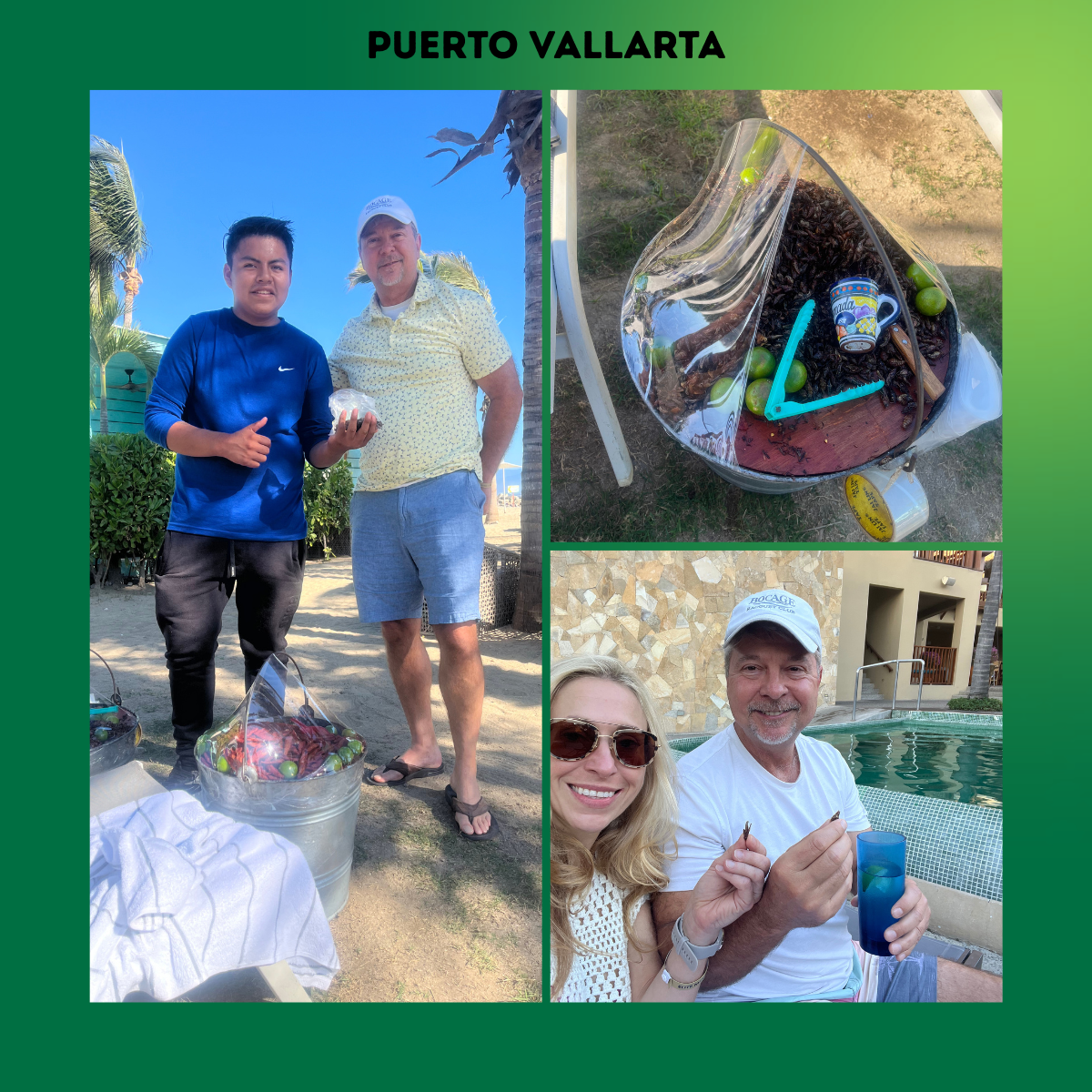
A Culinary Encounter in Puerto Vallarta
Discover how a visit to Puerto Vallarta gave SoldierFly Technologies CEO David Fluker a firsthand look at Mexico's edible insect traditions and what they reveal about the future of sustainable protein and commercial insect farming.
A Culinary Encounter in Puerto Vallarta
Last month, SoldierFly Technologies CEO David Fluker visited Puerto Vallarta, Mexico, where he experienced one of the country's best-known traditional foods—chapulines, toasted grasshoppers seasoned with lime and spices.
For many travelers, tasting edible insects is simply a cultural experience. For David, however, the moment represented something much larger: the intersection of decades of commercial insect farming experience and the growing global interest in insects as sustainable food.
As a second-generation insect farmer with roots in Fluker Farms and CEO of SoldierFly Technologies, David has spent much of his career developing commercial insect production systems. Seeing insects served as food rather than feed offered valuable insight into an industry that continues to gain international attention.
What Is Entomophagy?
Entomophagy is the practice of eating insects as food. Although it may seem unfamiliar in some countries, it has been part of traditional diets for centuries.
According to the Food and Agriculture Organization (FAO), more than 2 billion people worldwide regularly consume insects, with thousands of edible species documented across Asia, Africa, Latin America, and parts of Oceania.
Edible insects provide high-quality protein, healthy fats, vitamins, and minerals while requiring fewer natural resources than many conventional livestock systems.
Why Edible Insects Are Gaining Global Attention
Growing concerns about food security, climate change, and sustainable agriculture have accelerated interest in insect-based foods.
Several factors contribute to this trend:
High protein content
Efficient feed conversion
Lower greenhouse gas emissions
Reduced land requirements
Lower water consumption
Circular economy opportunities
These advantages have positioned insects as one of several promising alternative protein sources being explored worldwide.
From Animal Feed to Human Food
For David Fluker, tasting chapulines highlighted the similarities between two industries that are often viewed separately.
Fluker Farmshas spent decades producing insects for reptiles, amphibians, and other animals, while SoldierFly Technologies focuses on commercial Black Soldier Fly (BSF) production for sustainable animal feed and organic waste conversion.
Although edible insects and Black Soldier Fly production serve different markets, both industries rely on many of the same core principles, including efficient insect breeding, controlled production environments, quality management, and scalable farming systems.
What Commercial Insect Farmers Can Learn
Experiencing edible insect traditions firsthand reinforced an important lesson: successful insect farming is built on practical production knowledge rather than the final market.
Whether insects are produced for:
organic fertilizer,
waste reduction,
or human food,
commercial success depends on efficient breeding, biosecurity, automation, traceability, and scalable production systems.
Those same principles remain at the core of SoldierFly Technologies' approach to Black Soldier Fly farming.
Looking Ahead
Although SoldierFly Technologies remains focused on commercial Black Soldier Fly farming, the continued growth of edible insects demonstrates how rapidly the global insect industry is evolving.
Traditional cultures have recognized the value of insects as food for generations. As technology, research, and consumer awareness continue to advance, insect farming is expected to play an increasingly important role in sustainable agriculture and circular food systems.
Experiences like David Fluker's visit to Puerto Vallarta provide valuable perspective on how commercial insect farming continues to evolve across different industries and cultures.
Conclusion
From traditional markets in Mexico to modern commercial insect farming facilities, insects continue to demonstrate remarkable potential as sustainable biological resources.
While SoldierFly Technologies specializes in Black Soldier Fly farming systems for organic waste management and sustainable animal feed production, understanding the broader insect farming landscape helps drive innovation throughout the industry.
Interested in commercial Black Soldier Fly farming?
Explore our Academy, discover our commercial BSF farming systems, or contact SoldierFly Technologies to learn how scalable insect farming can support your sustainability goals.
About the Author
David Fluker is the CEO of SoldierFly Technologies and a second-generation insect farmer with roots in Fluker Farms (est. 1956). With more than a decade of hands-on experience in Black Soldier Fly bioconversion, David leads the development and licensing of scalable BSF farming systems that transform organic waste into sustainable insect protein and organic fertilizer. His work focuses on practical engineering solutions, modular automation, and commercial production systems that help organizations deploy profitable and sustainable Black Soldier Fly operations worldwide.
Learn more about the SoldierFly Technologies team.
Related Articles
BSF Academy Launches Spanish Training
BSF Farming: From Manual to Full Automation with BOOTS
What Do Black Soldier Flies Do?
10 Cool Facts About the Black Soldier Fly
